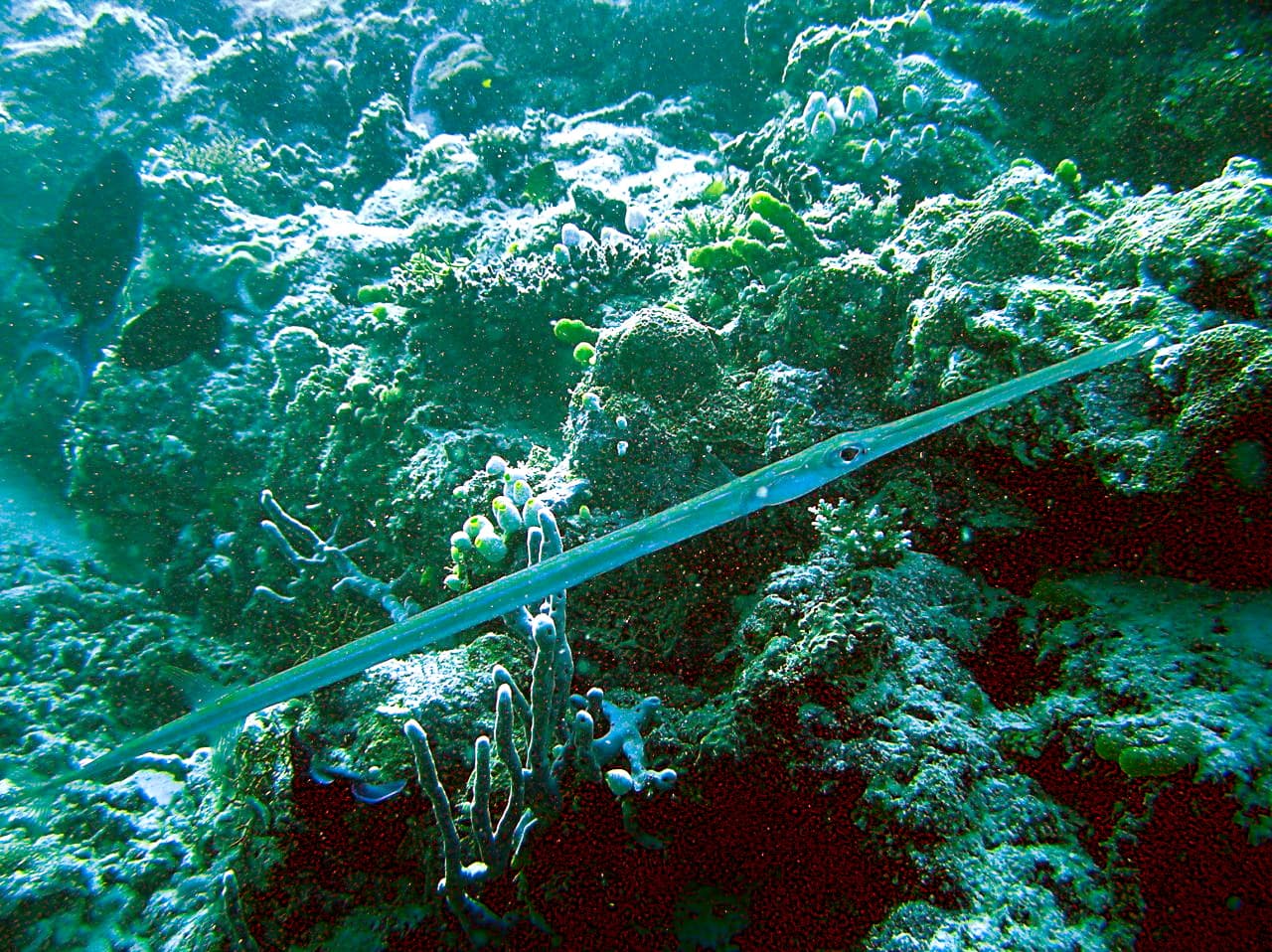
Fistularia commersonii
Flute Fish
Flute fish, or cornetfish, is a long thin coastal predator that often attacks small lures near shore.
About this fish
Flute fish looks almost unreal. For beginners, it shows how diverse Cyprus shore fishing can be.
Where to find it
Found around rocks, weed, clear water, and places where small baitfish hold close to shore.
How to identify it
Very long thin body, tube-like snout, and small mouth at the end.
How to catch it
Use light spinning tackle with small minnows, micro jigs, and slim spoons. A steady retrieve often works.
Baits and lures
- small minnow
- micro jig
- slim spoon
Equipment
- sea tackle matched to the style: light for rockfishing and small fish, stronger for distance or larger predators
- line/braid, leader, and strength matched to rocks, teeth, current, and fish size
- small minnows, micro jigs, and slim spoons
- landing net for high walls
- 1.Sight-fish in clear water when possible.
- 2.Use small lures because the mouth is narrow.
- 3.Do not lift it on a thin leader over a high wall.
Handling and rules
Not venomous, but the long body is easily damaged. Unhook quickly and carefully.
Usually caught from shore, but check zones and current sea fishing rules.
Where it lives in this guide
Forecast for Limassol Coast
Loading forecast…
What difficulty means
It is not fish size or danger. It means how hard it is to consistently find, trigger, and catch the species in real Cyprus conditions.
Beginner-friendly: simple tackle, clear bites, and less demand for perfect presentation.
Gear. Float rod, feeder, or simple bottom rig; small set of hooks, weights, and bait.
Weather. Best with wind under 18 km/h, moderate UV, and low rain chance.
Requires reading the spot: depth, wind, cover, fish activity, and retrieve speed.
Gear. Bring 2-3 methods, spare leaders, different weights/lures, and unhooking tools.
Weather. Wind at 18-28 km/h affects casting; watch gusts, pressure, and swell.
Hard to catch consistently: the species may be rare, local, seasonal, depth-sensitive, weather-sensitive, or active only in short windows.
Gear. Tackle depends on method and spot. Having options, patience, and spot-reading matters more than one 'correct' rig.
Weather. Watch activity windows: wind, pressure, clarity, water level, current, and light can matter more than the lure.