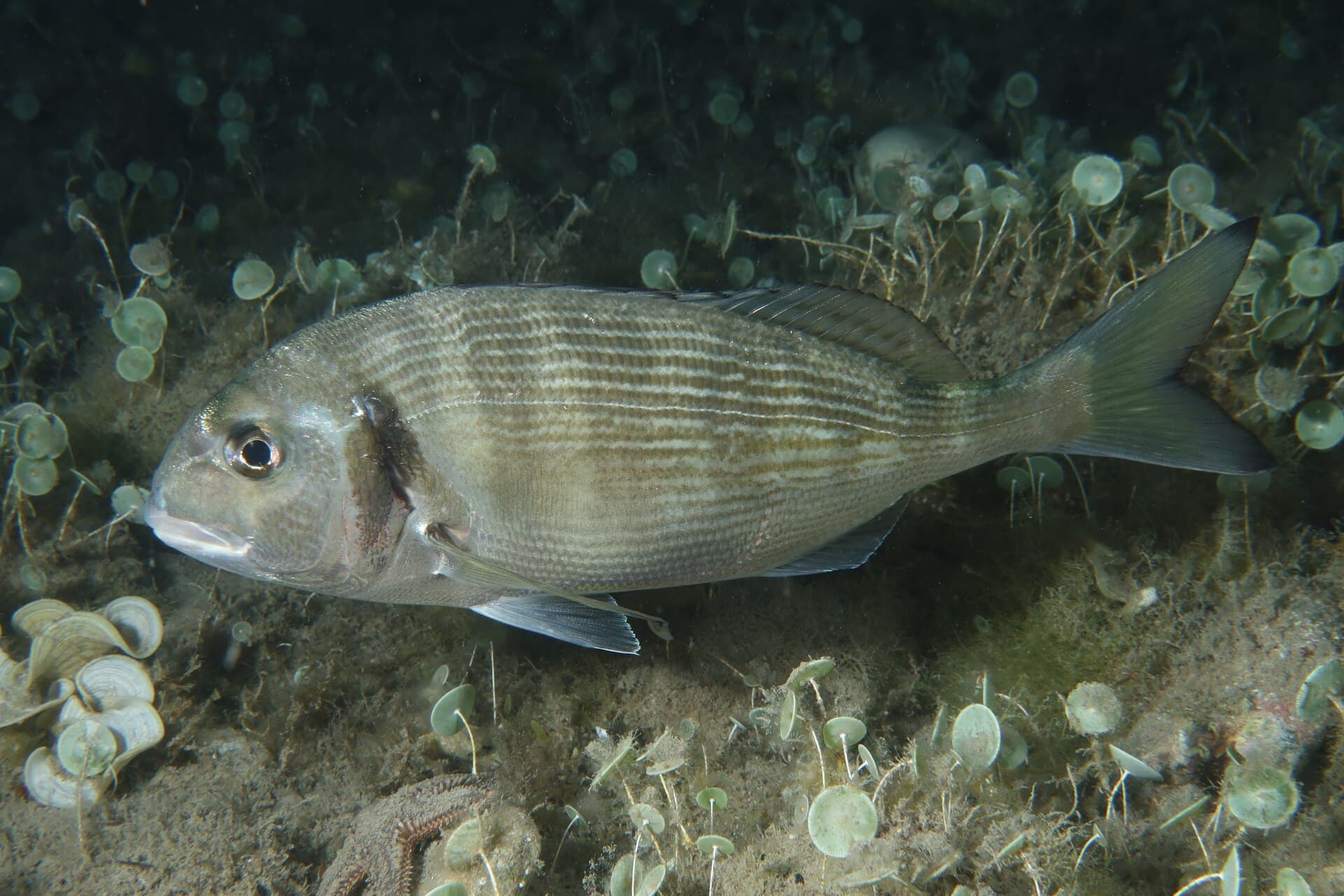
Sparus aurata
Sea Bream
Gilt-head bream is a popular shore bottom-fishing target. It is strong, cautious, and highly valued as food.
About this fish
Bream teaches patience. A common beginner mistake is striking the first tiny tap instead of the real bite.
Where to find it
Look for sand near rocks, weed, harbour walls, and shellfish areas.
How to identify it
Oval silver body, golden band between the eyes, and strong shell-crushing teeth.
How to catch it
Use a bottom rig with shrimp, worm, or shellfish. Do not strike too early: bream often tests the bait.
Baits and lures
- shrimp
- marine worm
- mussel
- small crab
Equipment
- leaders, sinkers, and hooks in several sizes matched to swell, bottom, and bait
- rod holder and spare hooklinks
- hook pliers and a rigid bait box
- 1.Use enough weight so waves do not drag the rig.
- 2.Keep the rod tip visible and wait for a confident pull.
- 3.After the bite, keep tension because the fish may run toward rocks.
Handling and rules
Not venomous, but spiny. Be careful with the dorsal fin and gill cover.
Usually fishable from shore without a license, but check minimum size and restricted zones.
Where it lives in this guide
Forecast for Paphos Coast
Loading forecast…
What difficulty means
It is not fish size or danger. It means how hard it is to consistently find, trigger, and catch the species in real Cyprus conditions.
Beginner-friendly: simple tackle, clear bites, and less demand for perfect presentation.
Gear. Float rod, feeder, or simple bottom rig; small set of hooks, weights, and bait.
Weather. Best with wind under 18 km/h, moderate UV, and low rain chance.
Requires reading the spot: depth, wind, cover, fish activity, and retrieve speed.
Gear. Bring 2-3 methods, spare leaders, different weights/lures, and unhooking tools.
Weather. Wind at 18-28 km/h affects casting; watch gusts, pressure, and swell.
Hard to catch consistently: the species may be rare, local, seasonal, depth-sensitive, weather-sensitive, or active only in short windows.
Gear. Tackle depends on method and spot. Having options, patience, and spot-reading matters more than one 'correct' rig.
Weather. Watch activity windows: wind, pressure, clarity, water level, current, and light can matter more than the lure.