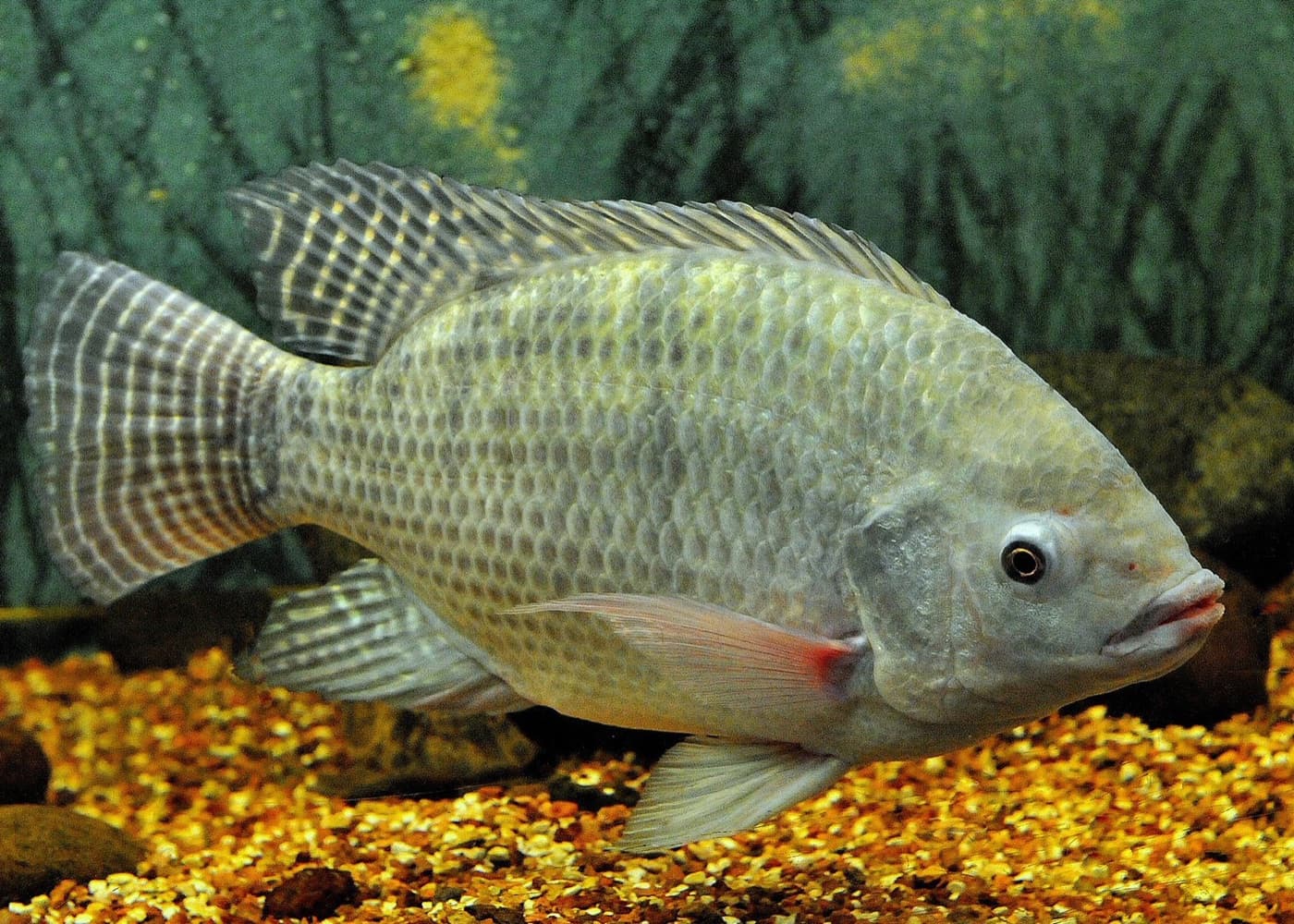
Oreochromis niloticus
Tilapia
Tilapia is active in warm water and works well for simple float fishing. It often moves in groups.
About this fish
Tilapia is great for learning: it teaches float reading, depth setting, and small-bait presentation.
Where to find it
Look in warm shallow areas, calm bays, rocks, and vegetation edges.
How to identify it
Deep body, long dorsal fin, and often visible vertical bars.
How to catch it
Use a light float, small hook, and small bait. Keep the bait near the bottom or vegetation.
Baits and lures
- bread
- corn
- dough
- small worm
Equipment
- line/leaders, hooks, and sinkers in several sizes matched to distance and fish activity
- small hooks, split shot, and a sensitive float
- small groundbait bucket or bread to hold the group
- 1.Set the float depth so the bait sits near the bottom.
- 2.Use small amounts of groundbait to keep the group nearby.
- 3.Strike gently because small fish have soft mouths.
Handling and rules
Not venomous. The dorsal fin has spiny rays, so grip carefully over the body.
Reservoir fishing requires a license and an open reservoir.
Where it lives in this guide
- Tamasos ReservoirFreshwaterLefkosia · 35.017° N, 33.248° E
- Klirou-Akakiou-Malounda ReservoirFreshwaterLefkosia · 35.015° N, 33.173° E
- Germasogeia ReservoirFreshwaterLemesos · 34.744° N, 33.084° E
- Dipotamos ReservoirFreshwaterLarnaka · 34.860° N, 33.351° E
- Kalavasos ReservoirFreshwaterLarnaka · 34.804° N, 33.261° E
- Aradippou ReservoirFreshwaterLarnaka · 34.960° N, 33.580° E
- Asprokremmos ReservoirFreshwaterPafos · 34.726° N, 32.554° E
- Evretou ReservoirFreshwaterPafos · 34.976° N, 32.473° E
- Achna ReservoirFreshwaterAmmochostos · 35.048° N, 33.803° E
Forecast for Tamasos Reservoir
Loading forecast…
What difficulty means
It is not fish size or danger. It means how hard it is to consistently find, trigger, and catch the species in real Cyprus conditions.
Beginner-friendly: simple tackle, clear bites, and less demand for perfect presentation.
Gear. Float rod, feeder, or simple bottom rig; small set of hooks, weights, and bait.
Weather. Best with wind under 18 km/h, moderate UV, and low rain chance.
Requires reading the spot: depth, wind, cover, fish activity, and retrieve speed.
Gear. Bring 2-3 methods, spare leaders, different weights/lures, and unhooking tools.
Weather. Wind at 18-28 km/h affects casting; watch gusts, pressure, and swell.
Hard to catch consistently: the species may be rare, local, seasonal, depth-sensitive, weather-sensitive, or active only in short windows.
Gear. Tackle depends on method and spot. Having options, patience, and spot-reading matters more than one 'correct' rig.
Weather. Watch activity windows: wind, pressure, clarity, water level, current, and light can matter more than the lure.